The correct cylinder grinding stone cannot be selected by outside diameter alone. Cylinder material, current surface, target roughness, machine mounting, speed and applied pressure must be considered together.
Match stone type to cylinder material
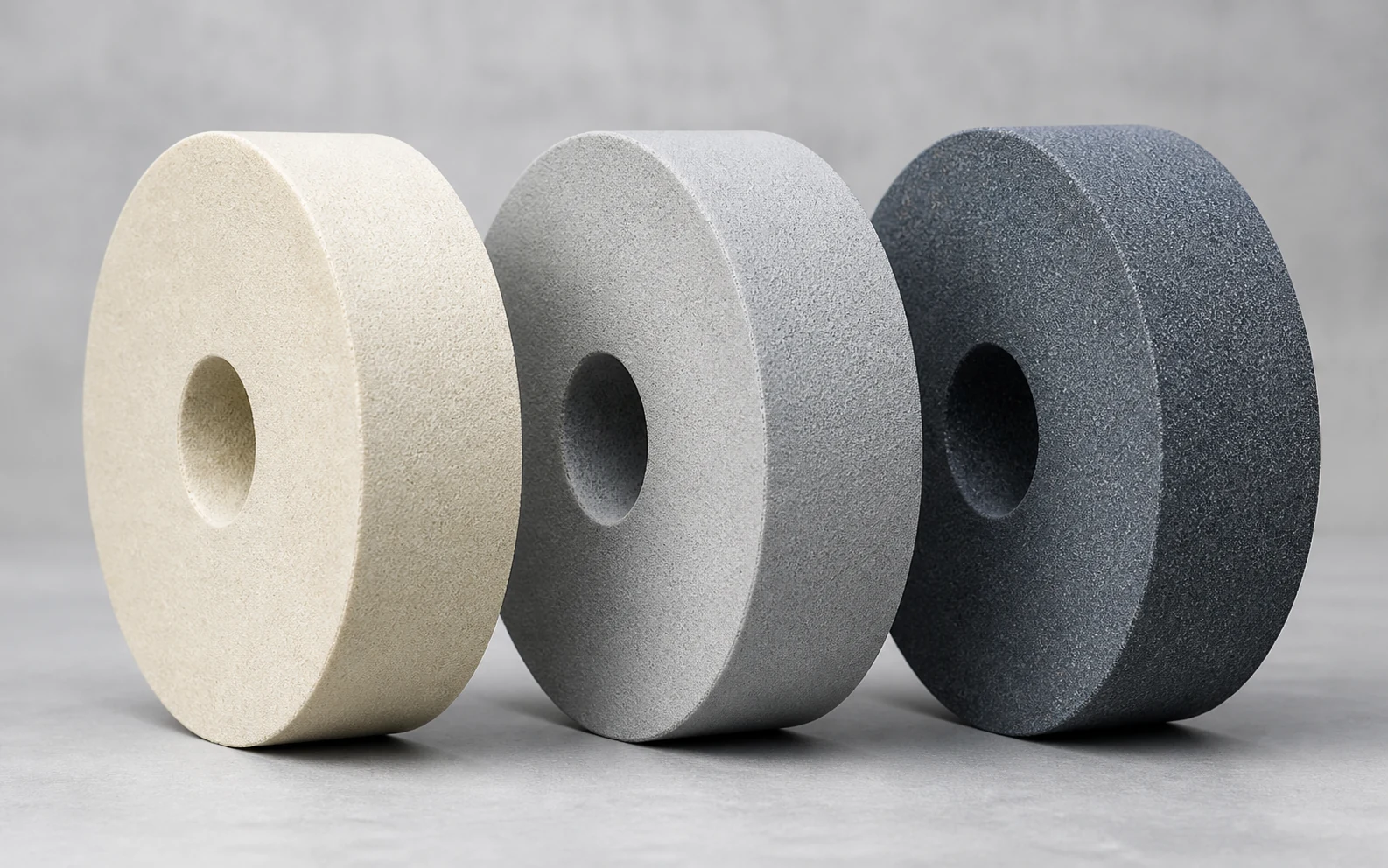
Type F solutions are evaluated for copper and zinc cylinders, Type C alternatives for different surface-preparation stages, and Steel/Chrome stones for controlled processing of steel and chrome surfaces. Final use depends on machine and process conditions.
Bond and abrasive character balance cutting ability, surface pattern and the wear behaviour of the stone itself.
Grit number and surface target
Coarser grits may be considered for stock removal and surface correction, while finer grits support finishing and lower roughness targets. One grit may not cover an entire process sequence.
Record the starting surface, earlier process marks and target Ra/Rz values to build a sequence. Catalogue references should be confirmed in actual machine trials.
Dimensions, body thickness and mounting
Outside diameter, bore, body thickness and mounting geometry must fully match the machine. Stones in the EmbePack range use thick, standard circular body proportions for industrial cylinder processing; thin discs or unusual decorative forms are not part of this application.
Before mounting, inspect physical integrity, direction and machine safety procedures. Make the final choice within the machine manufacturer's limits and with a qualified operator.
Create a controlled trial record
Record speed, feed, pressure, coolant, cycle time and measured surface values during trials. This creates a comparable technical reference for repeat processes and future orders.
Using cylinder material, machine dimensions and target surface data, EmbePack can technically evaluate Type F, Type C, Steel/Chrome or custom-dimension options.
Key takeaways
Industrial Grinding-stone Selection Guide
- Match stone type to cylinder material and process stage.
- Select grit from starting surface and target roughness.
- Confirm diameter, bore and thickness against the machine.
- Record trial parameters with measured results.