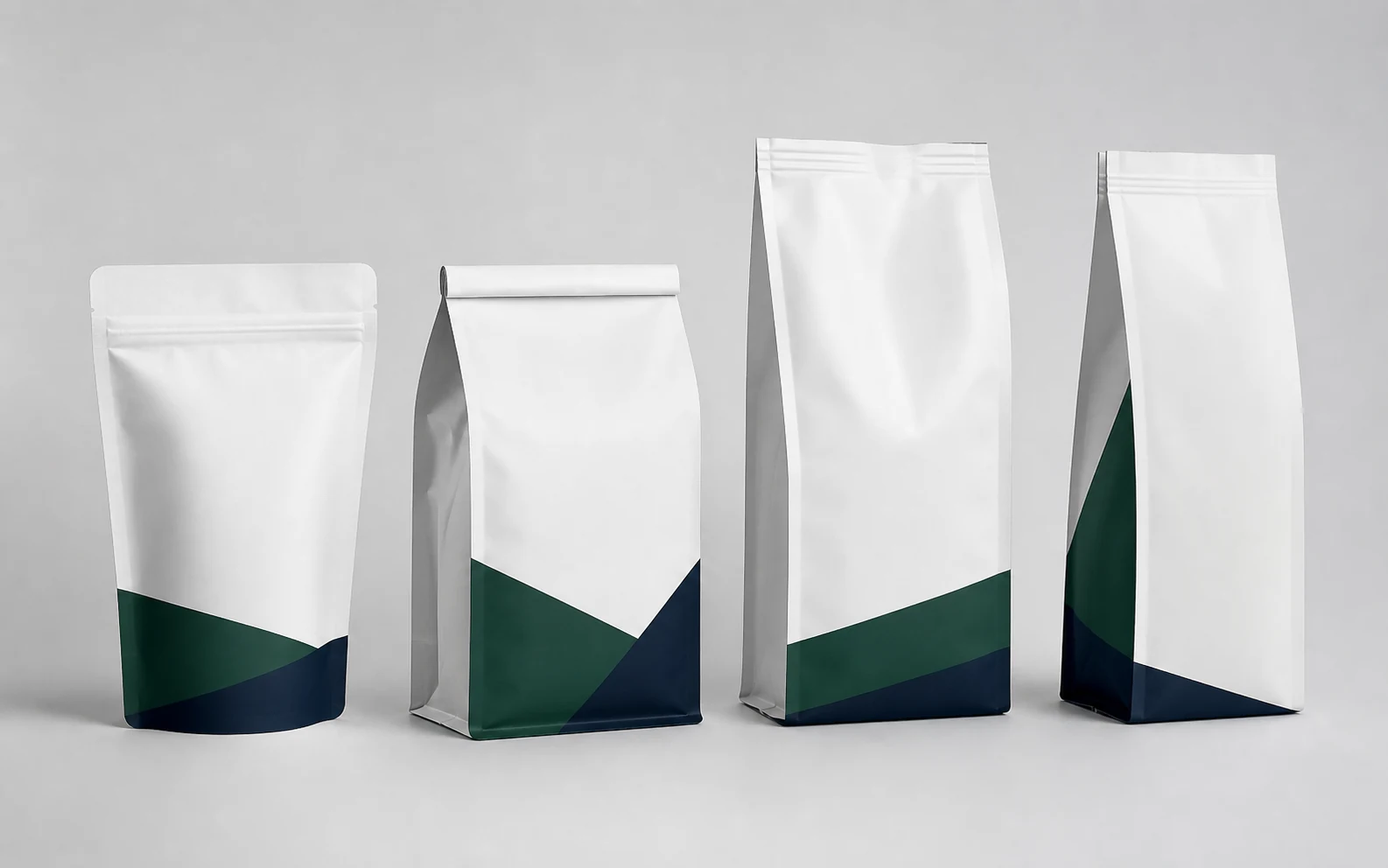
Pouch geometry is more than a visual preference. It determines how the pack stands, the printable area available, filling efficiency, transport volume and the way the consumer handles the product.
Stand-up pouch: flexible and visible
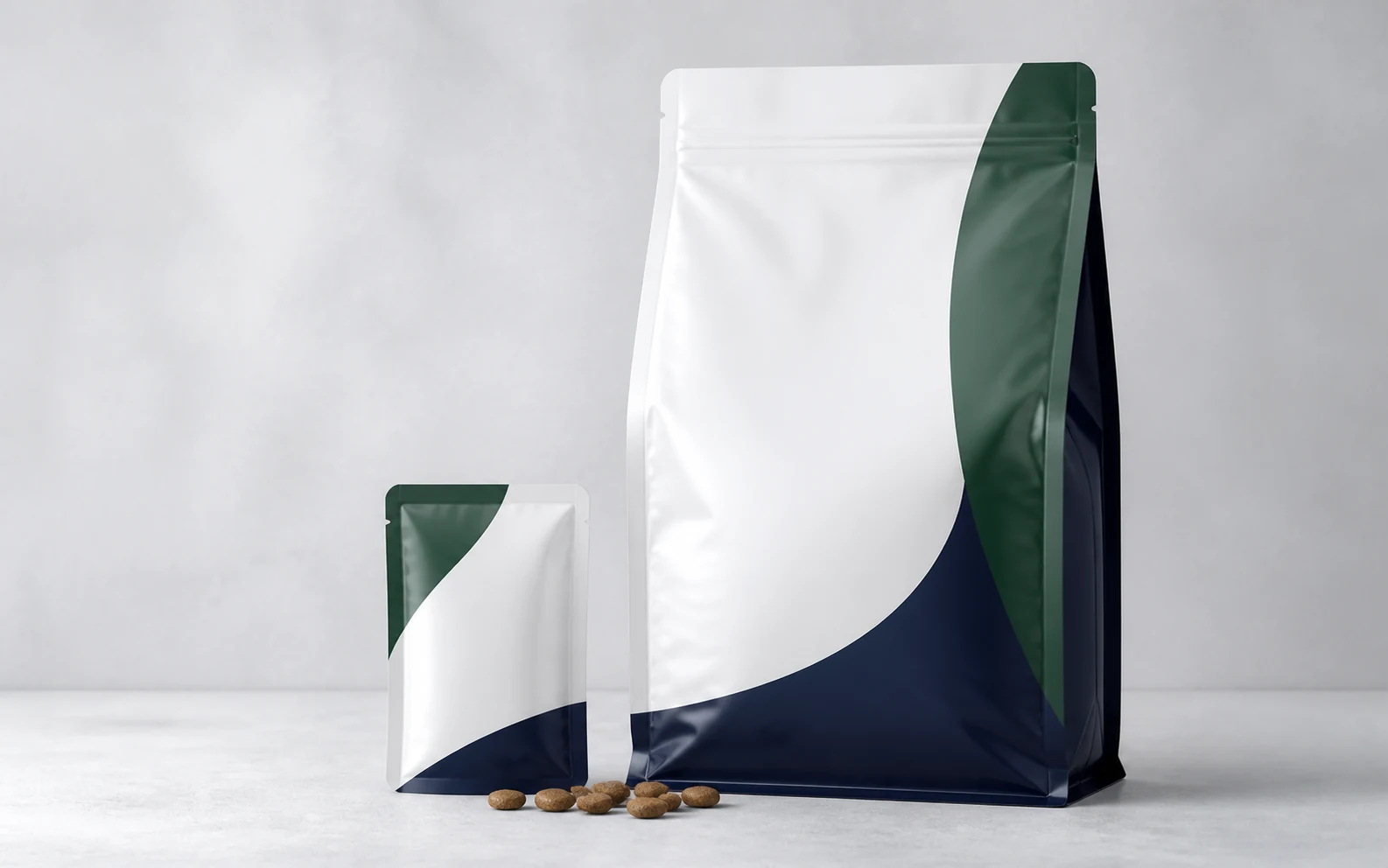
Its bottom gusset lets a stand-up pouch create strong shelf presence at small and medium fill weights. Zippers, easy-open notches and valves can add functionality.
It is commonly considered for coffee, snacks, pet treats and powders. Bottom geometry, filling method and the way the product settles should still be tested together.
Flat-bottom and quad-seal: volume with defined panels
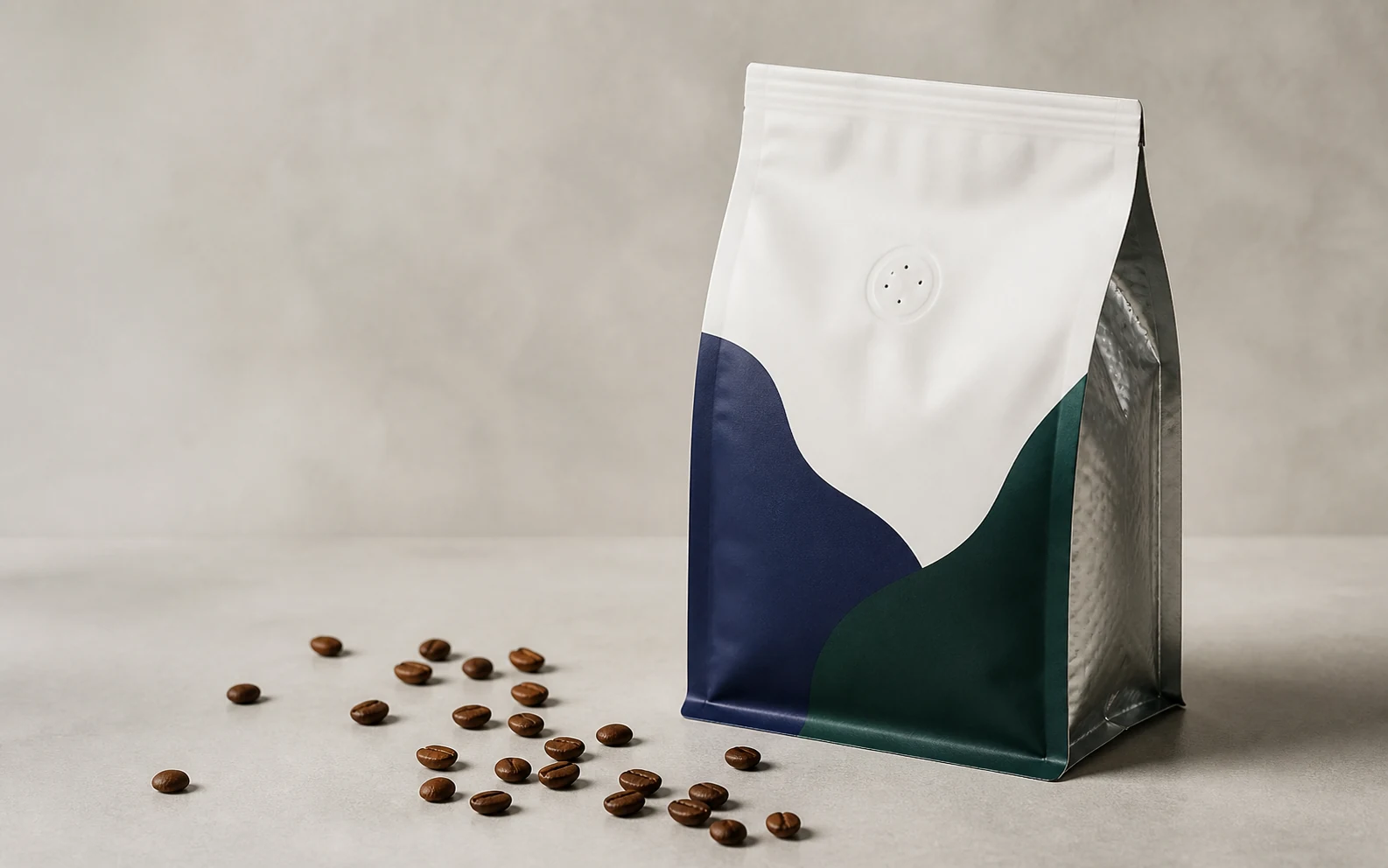
A flat-bottom pouch uses a stable base and defined side panels to create a premium, box-like presentation. Front, back, sides and bottom can all support brand communication.
Four corner seals help a quad-seal bag retain its shape at higher volumes. It can be evaluated for coffee, dry pet food, pulses and similar products where transport and stacking matter.
Side-gusset bag: an efficient classic
A side-gusset bag expands as it is filled, remains compact when empty and scales to larger volumes. It can be an efficient established option where a self-standing base is not essential.
Do not decide on appearance alone. Size samples using net fill weight, product density, pallet pattern, packing line and required added features.
Key takeaways
Stand-up, Flat-bottom or Quad-seal: Which Format?
- Select format against shelf and logistics goals.
- Calculate fill volume with the true product density.
- Plan zippers, valves and notches at the start.