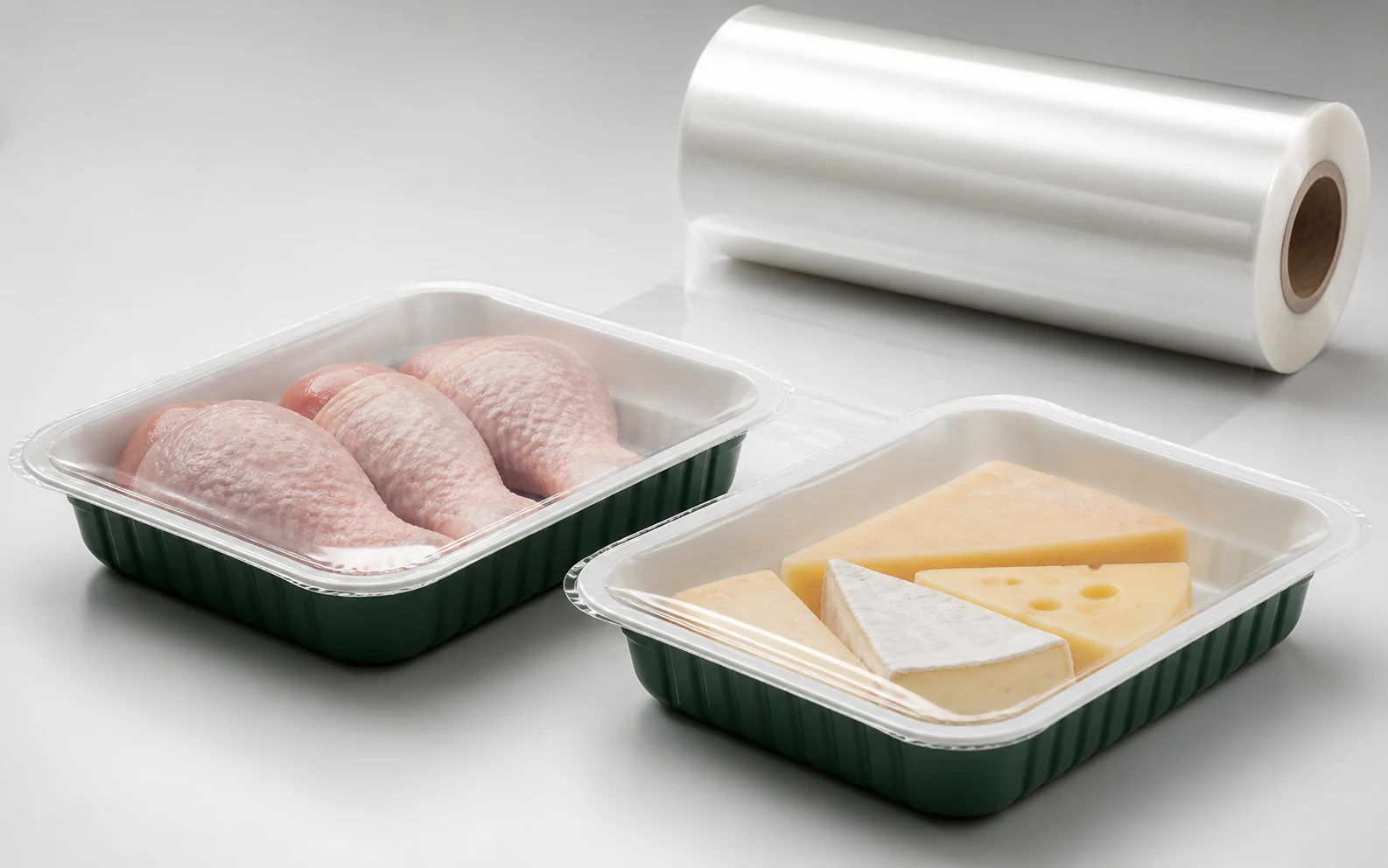
Lidding and bottom films may look like separate materials, but their performance becomes shared at the sealing interface. Compatibility, forming depth, barrier and opening behaviour should be evaluated as one system.
Product and process conditions
Fresh meat, poultry, fish and cheese have different oxygen, leakage and shelf-life requirements. Vacuum, modified atmosphere or standard sealing each changes the film targets.
Line speed, sealing temperature, contact surface and cold-chain details should be clear before the top-bottom combination is selected.
Forming balance in the bottom web
A thermoforming bottom film must reach the required pocket depth without excessive thinning or weak corners. Gauge, layer distribution, heating profile and mould geometry work together.
The choice between a rigid or flexible bottom structure depends on product weight, shelf display, transport and use after opening.
Sealing and opening in the lid
The lid should create reliable integrity while allowing controlled consumer opening when peelability is required. This balance depends on sealant and tray-surface compatibility.
Anti-fog appearance, high clarity or print should be defined early, then the combination should be tested with the real product and line.
Key takeaways
How to Select Lidding and Bottom Films Together
- Treat lid and bottom as one packaging system.
- Measure forming depth together with corner thinning.
- Validate seal and peel force on the actual tray surface.