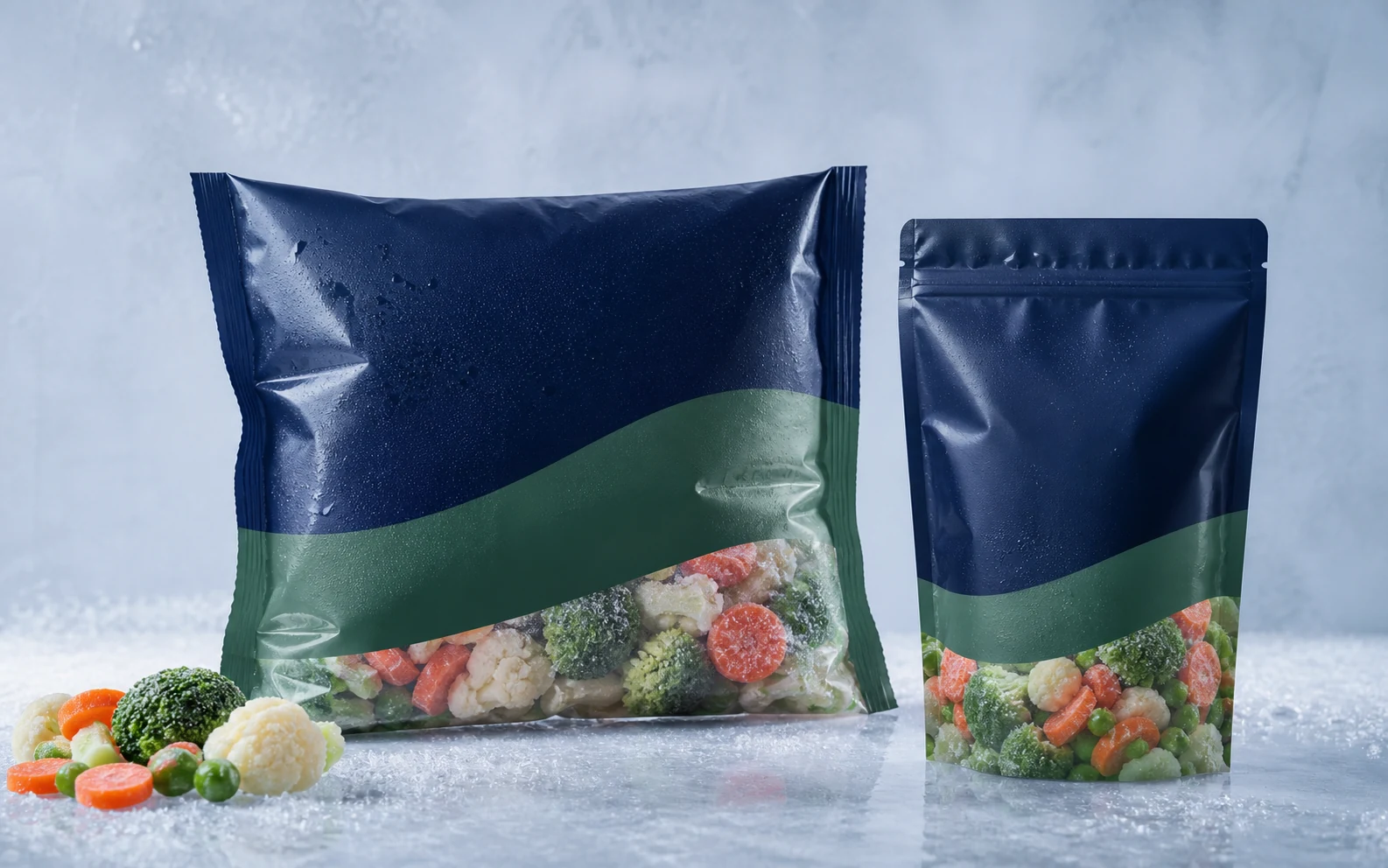
Frozen-food packaging faces low temperatures, ice crystals, hard product edges and transport impacts from production to the retail freezer. The film must adapt without becoming brittle in cold conditions.
Mechanical strength in the cold
A structure that appears flexible at room temperature can behave differently when frozen. Impact strength, puncture resistance and fold areas should be evaluated at the intended storage temperature.
Product geometry and headspace also matter for sharp vegetable pieces, bone-in products or shellfish.
Seal area and moisture
Product or ice particles entering the seal area during filling can weaken integrity. Jaw design, dwell time and temperature window must be stable alongside the film structure.
Moisture conditions inside and outside the pack may affect print appearance and surface friction. The actual line and cold-chain scenario should be simulated during sampling.
Shelf visibility and use
High-quality print helps shoppers distinguish variants in frosted retail freezers. If a clear window is used, visibility should be balanced against light-protection needs.
Reclosure or easy opening can improve convenience for multi-portion products. Confirm the final format through real filling and drop tests.
Key takeaways
Designing Reliable Frozen-food Packaging
- Run mechanical tests at the target low temperature.
- Account for ice and product contamination in the seal area.
- Combine cold chain, print and use requirements in one brief.